2026-07-27
IOMCD
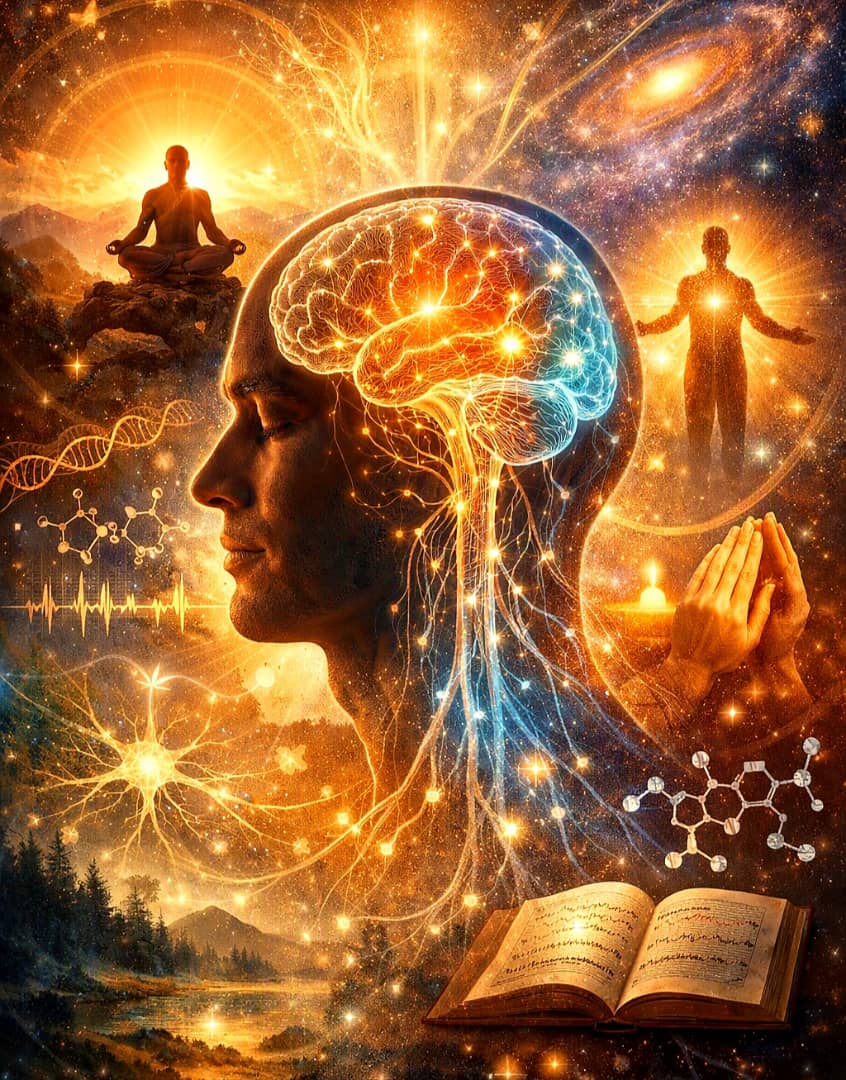
Spiritual neuroscience is an emerging interdisciplinary concept that examines the dynamic relationship between neural processes and spiritual experiences. This field integrates insights from neuroscience, psychology, and philosophy to understand how the brain generates states of transcendence, the perception of meaning, and the feeling of inner peace. Unlike neurotheology, which focuses primarily on religious cognition and patterns of belief, spiritual neuroscience addresses a broader spectrum of experiences—such as meditation, aesthetic awe, and contemplative awareness—as manifestations of the brain’s capacity to move beyond the self.
Researchers in this domain investigate how specific neural networks—such as the prefrontal cortex, the limbic system, and parietal regions—interact to produce feelings of unity, compassion, and expanded consciousness. The term reflects a holistic view of human spirituality as a phenomenon that is both biologically rooted and phenomenologically profound, bridging scientific inquiry with humanity’s enduring quest for meaning.
Human beings live moments unlike any others—moments in which they surpass the boundaries of everyday perception and feel the world suddenly widen, while the self sheds its usual weight. Such moments may occur during meditation, prayer, listening to profound music, or standing before a natural landscape that opens the heart to an inexplicable sense of wonder. These experiences, often called “transcendent experiences,” are not merely fleeting psychological states but complex neural phenomena that reveal the brain’s ability to generate forms of consciousness that exceed the ordinary. Here emerges spiritual neuroscience, the field that seeks to understand the neural foundations of spiritual experience and how the brain can create a sense of meaning, serenity, and union with the world.
The spiritual experience begins in the brain itself—in a wide network of regions that interact in unique ways when a person enters a state of contemplation or reverence. Studies indicate that the prefrontal cortex, responsible for focus, decision-making, and attention regulation, becomes highly active during spiritual experiences. This activity gives the individual a sense that the experience is not merely an emotional surge but a meaningful moment, one in which consciousness is directed toward a clearly defined point. Conversely, activity in the parietal lobe, the region that provides the sense of bodily boundaries and separation between self and world, decreases. When this activity diminishes, the “ego” seems to fade slightly, and the boundaries between the person and the universe become less rigid, generating the sense of union or dissolution described by meditators and mystics for centuries.
Meanwhile, the limbic system, the center of emotion and memory, ignites during moments of transcendence. This ignition is not merely electrical activity; it is accompanied by the release of neurotransmitters that form the inner chemistry of the spiritual experience. Dopamine rises, granting a sense of joy and fullness, as if the experience were an internal reward. Serotonin increases, creating a state of deep calm and balance. Oxytocin, the bonding hormone, surges especially during collective experiences such as chanting or shared rituals, making the individual feel part of a group or a larger fabric. Even endorphins appear in rituals involving physical effort or intense discipline, transforming pain into meaning and fatigue into a spiritual state.
This chemistry is not merely biological interaction but part of the brain’s design that allows humans to live moments that transcend everyday experience. The brain is not a mechanical machine but an organ capable of producing multiple states of consciousness—some logical and rational, others emotional, and some spiritual. The spiritual experience is one of the highest expressions of this diversity, because it unites cognition, emotion, and meaning in a single moment.
But why does the human being need transcendence? From an evolutionary perspective, spiritual experiences were a means of survival. A person who could find meaning in pain, feel serenity in danger, or connect with their community through shared rituals was better equipped to face challenges. The spiritual experience strengthened social bonds, enhanced psychological resilience, and regulated emotions during moments of stress. From a psychological perspective, it gives the individual the ability to overcome fear, soothe anxiety, and reorganize the self. It is a moment in which life feels not like a random sequence of events but part of a larger story. From a philosophical perspective, the spiritual experience is the highest form of the search for meaning—the search that distinguishes humans from other beings.
The spiritual experience manifests in multiple forms. In meditation, activity in the self-related regions decreases, making the person feel part of existence, while prefrontal activity rises, creating rare mental clarity. In prayer, regions of focus interact with emotional regions, generating a sense of being “heard” and of a relationship with a greater force. In art, music, painting, or poetry strongly stimulate the limbic system, opening pathways to aesthetic awe that resemble spiritual experience. In nature, when a person stands before a vast landscape, activity in the self-center decreases, making the world feel larger and the person part of that vastness.
Yet the most intriguing question remains: Is the spiritual experience merely neural activity, or is it a window onto something else? Here researchers divide into two schools. The first, neural spirituality, argues that the spiritual experience results solely from brain activity and that transcendence is an advanced neural state. The second, transcendent consciousness, argues that the brain is not the source of the experience but its gateway, and that neural activity is a translation of something greater—perhaps a cosmic consciousness or a higher level of existence. Science cannot resolve this debate, because it lacks tools to measure what lies beyond matter. All it can say is that something happens in the brain when we transcend, but it does not know why it happens with such beauty.
In the end, the spiritual experience reveals a fundamental truth: the human being is not merely a body but a creature searching for the supreme mystery that governs the laws of the universe. Transcendence is not an escape from reality but an entry into its depth. It is a moment in which time pauses, the mind quiets, and the person feels that life is not merely biological existence but a journey toward deeper meaning. Spiritual neuroscience does not diminish the value of the soul; it shows that the soul has roots in the brain, and that the brain itself is designed to seek serenity, meaning, and union. It is the science that tells us that the human being does not only think but longs for what lies beyond thought—for that inner light that makes life more bearable and more beautiful.